SMALL BITES


SMALLBITES (all content copyright Karen Wolfe Whitchurch)
A random selection from my local newspaper articles: amusing, sad, thought-provoking, opinionated or just self-indulgent. Pick at or discard them like a juicy bone!
Small dog SYNDROME
©Karen Whitchurch 2015
The familiar scenario unfolds. There we’ll be, me and dogs, following our usual route, when from somewhere ahead there’ll be an outbreak of shrieking, accompanied by desperate cries of: “TALLULAH! STOP IT! No! Be NICE….” My two will roll their eyes: we’ll look at one another and sigh, knowing what’s waiting round the corner.
Sure enough, there will be a harassed, red-faced woman (sorry to say that it usually is a woman ) pressed up against the nearest wall/hedge/car whilst desperately trying to restrain some pint-sized monster intent on shredding everything in sight. Said monster, about the size of a domestic cat, is invariably a terrier, a something-HuaHua, or a something-Poo. It will also, whatever the weather and however thick its fur, be wearing an embarrassing patterned coat or possibly a novelty bandanna. It will be tenuously attached to an extendable lead, or a no-control hi-vis harness. My dogs, heard it all before, will walk on, unimpressed, but that won’t stop Little Miss Gobby, who’s hungry for a set-to. Hackles up, teeth bared, gargling defiance and snapping wildly at the nearest target (usually the hapless owner’s legs) ‘Well, come on, Big Boys! Do ya feel lucky???’
There will follow an accusing glare. “She’s scared of big dogs!” (well, no, love, she plainly isn’t) ‘She got attacked when she were a pup.’ or failing that, an attempted negotiation. “Tallulah. TALLULAH! Nicely!.Good girl (no, she isn’t) Sit! Wait! Lie down! BISCUIT!” (Interesting, but futile, given that the only two words Tallulah recognises are her name and ‘biscuit.’) All of which might sound amusing, but it’s not, because it doesn’t have to be like that. Welcome to the reality of Small Dog Syndrome.
Artificially elevated status….
How do these situations come about? Is it that all small breeds are snappy, antisocial have-a-go fiends? Of course not. Chihuahua, Yorkie, or Pomeranian, Wolfhound, Westie or Tibetan Mastiff, a dog is a dog is a dog. But each breed does have its unique characteristics: Chihuahuas are generally one-person dogs, bred to warn Mexican villagers of approaching invaders, miniature Schnautzers and Pomeranians tend to be extremely vocal and quite territorial, while Jack Russells, diggers and ratters, are brave, feisty little creatures which will stand their ground. Plenty of dogs are gobby, but that doesn’t have to mean aggressive.
And neither does mini=horrible. Human beings are hard-wired (or should be) to protect the small and vulnerable. So of course, you take no risks with your cute, big-eyed fluffball. There’s a big, bad world out there, and she’s soooo tiny! Problems begin when you forget that she’s a dog. Carry her everywhere, she’ll lap it up! Let her up beside you while you watch Corrie…share your bed with her, pick her up whenever another dog approaches, just in case. Wrong! Wrong, because you’ve raised her profile. She’s become your equal, no, your superior, and now she’s in charge! Which does her no favours at all. Dogs, large or small, are world-class opportunists: if they can get away with it, they will. And if they keep getting away with it, you’ve got yourself a problem, or more likely, a Syndrome.
…..demotion to the ranks
Meanwhile, back in the alleyway: Tallulah may well be scared of bigger dogs. But if that’s true, then she has no confidence that her owner can or will sort out the problem. Therefore it’s down to Tallulah to protect both of them the only way she knows how. So what does Mummy do? Picks her up, of course, giving her the perfect opportunity to snap and shriek for Yorkshire! Poor Tallulah, all that bravado, and nowhere to hide.
Arguing with her achieves nothing beyond giving her attention (albeit the negative kind.) And as for that biscuit-offer…reward for bad behaviour, or what? Would you hand out chocolate to your mid-tantrum toddler? Maybe Princess Tallulah has ruled the roost since puppyhood: that’s misguided leadership. Or possibly she came from a lovely home with a darling old lady who showed love by giving in to her: it’s all the same. Dogs need boundaries, guidelines, and ultimately, they have to know who’s in charge.
So, if you live with a mini-dictator, socialise him/her as much as possible. Do you have a friend/relative/neighbour who has dogs she can run with? If she needs it, book her into a training-class: a great leveller, because it takes the fear out of meeting dogs en masse. And work on the home-situation: show her/him you’re the Boss. My house! My furniture! (invitation only.) My bed! (you’ve got your own.) My doorways (which I cross first, thank you) My food, My biscuits (I eat before you, sunshine) My stuff (you’ve got your own) and most of all, My rules. Small, subtle things that can help change bad behaviour.
Welcome to Nice Little Dog Syndrome.
TOTAL RECALL
©Karen Whitchurch 2017
There are few sights more poignant than that lone, desperate figure in the park, on the beach, the bridle-path or cliff-top, bawling vainly into the wind after an errant dog who’s done a runner.Even sadder, though, is the bouncy, bursting-with-life dog that’s never been allowed to run free, because ‘We can’t get him back’….(sub-text ‘We don’t know how. We haven’t taught him, and now we don’t trust him.’) What a pointless situation. And yet it needn’t be like that.
You are the centre of your puppy’s universe, the gravy on his bone, the squeak in his rubber ball. Your role is to teach him what’s what, where and how he fits into the pack, and eventually, the outside world. Because he trusts you and wants to please you, he loves to be with you. That single fact makes training a young dog so much easier. Use it. Build on it.
The learning-process starts on Day One, (in your house/garden, wherever) and it’s down to you to make it fun. Call him constantly, run away from him, make silly noises, jump about, play hide-and-seek, squeak a toy, wave a raggy, blow a whistle, make a huge game of it, and an even bigger fuss when he comes to you. (In my experience, women are far better at this kind of thing: being more prepared to play the fool than men. Also, their naturally higher-pitched voices sound more encouraging than commanding.) Then do it all with his collar and lead on. And if you have kids or grandkids, rope them in as natural allies, because playing’s what they do best.
Praise good behaviour, ignore the bad, and don’t reprimand, unless there’s immediate danger….puppies are prone to distraction, after all, it’s a big, fascinating world, and he’s only a baby: so, let him potter, scent the air, chase the butterflies, but stand your ground so that he comes to you (never the other way round) however long it takes. The object of all this OTT stuff is to make yourself the centre of attention, and it will pay huge dividends when Proper Walks begin. Get this right, and you’ve cracked it.
Now let’s suppose you’ve adopted an adult dog, maybe a rescuee, which is something of an unknown quantity. You’re unsure how he’ll react to open spaces, other dogs, that first taste of freedom. Does he have hidden issues? Do you feel confident in your own abilities? In short, what’s the best approach?
Broadly, much the same as puppy-training, with added extras. All training begins with the basics. The objective here is gaining trust through good leadership. Start small, build gradually, don’t go for quick-fixes, and don’t take risks. Teach him or her at home, off-lead and on, remembering to reward, reward, reward! Use toys or treats, go overboard with the praise, but make sure each exercise is a lesson learned and reinforced, Older dogs have longer concentration-spans, which enables both of you to train in more depth. But if you’re still unsure of his intentions, take him out on an extender or a long line: that way, you are in control and can easily ‘reel him in’ (and back to you!) if necessary.
When you do venture out, go armed with treats, toys, and, if possible another dog and handler of your acquaintance. Dogs, especially those lacking confidence, tend to stick with a companion. And when you first let him off the lead…heart-stopping moment!…trust in him, and in yourself.
Don’t make the elementary mistake of only calling him when he’s going back on-lead!…he’ll soon get wise to that one! Do it randomly (always offering a reward) so that he won’t anticipate boring old going-home time, but will associate you with nice stuff. Master the Total Recall, and, trust me, he will be back!
WHY DOES HE DO THAT?
©Karen Whitchurch 2020
You and your dog know each other so well it’s almost telepathic. Who needs words when you have body language? Yet he’ll often do something that makes you wonder: that’s because every dog, Chihuahua, Catahoula or Cockerpoo is only a sidestep from his ancestor, the wolf. 20,000+ years of human/canine interaction have tamed and domesticated those descendants, but the old traits remain, and constantly resurface. If you’ve ever wondered what’s going on with your own house-wolf, here are a few answers.
WHY DOES HE…chase cats?
Are dogs and cats natural enemies? No. Dogs chase cats, squirrels, and anything else because they run! It’s the hunt-chase instinct in action. But the cool, unmoving cat sneering from fence or gate-post baffles the dog, because he doesn’t know what to do. No reaction=no chase=no fun.
WHY DOES HE…jump up at family, visitors and strangers?
It’s not just because he loves everybody! This is an echo of early puppy behaviour. Momma wolf would bring home the pre-masticated food, and her cubs would jump up to lick at her mouth so she’d deliver their yummy regurgitated dinner. Although visitors don’t generally arrive bearing half-chewed foodstuffs, instinct, if not checked, thinks that they might. And the cute, jumpy-uppy pup, whilst annoying, isn’t in the same league as the 100lb meatball who hasn’t learned that it’s not the done thing.
WHY DOES HE…keep humping things?
Inappropriate mounting, especially in play-fights, is normal behaviour in young dogs, male or female. They’re adolescents, with a rush of hormones and the need to establish their rank. But mounting is also a display of dominant behaviour, so if your dog keeps trying it on with you or one of the family, take a good look at who’s the leader of your pack, and make sure it’s not him!
WHY DOES HE…cover up his droppings?
Back in Wolf-world, he would dispose of the evidence so the enemy couldn’t track him, and to this day, he’ll make the effort to bury his waste. Even on concrete. Tidy.
WHY DOES HE…roll in stinky stuff?
If you’ve ever watched in horror while your dog coated himself in essence of dead bird, eau-de-duck-poo or best of all, rotting cod cologne, you’ll relate to this one. One theory is that he does it to mask his own scent, in case of enemy attacks. Another suggests that it’s a sociable gesture, to share an interesting scent with the rest of the pack. What a lovely thought, if never, ever appreciated!
WHY DOES HE…eat grass, and then throw up?
My dogs do this quite often: it’s the canine equivalent of sticking your fingers down your throat, a built-in survival mechanism. Certain grasses (and the dog instinctively knows which ones) stimulate regurgitation, clearing the digestive system of parasites, potential toxins and other nasties.
WHY DOES HE…gaze into your eyes and nuzzle you, snuggle up beside you, sigh contentedly and go to sleep….?
…because he feels safe beside his leader. And maybe just because he loves you.
We’re a nation of animal-lovers, right? Apart from the emotional connection, responsible pet-ownership involves fundamentals such as the provision of food, water, shelter, veterinary care and protection against all known Nasties.Vaccination being the first line of defence against disease, why then is at an an all-time low? There are two strands to this debate.
Puppy vaccinations provide protection against distemper, hepatitis, parvovirus, leptospirosis and parainfluenza. When I was a kid and vaccination wasn’t routine, dogs often contracted one of these.(believe me, they were killers, and still are). But groups such as Canine Health Concern argue that annual boosters are both harmful and unnecessary, because early immunisation confers immunity for at least seven years, if not for life. Spokeswoman Catherine O’Driscoll reports cases of epilepsy and obsessional behaviour arising directly after the administration of booster-doses. Cause and effect, or just coincidence? Some have dubbed the altered behaviour ‘dog autism’.
In 1998, Dr. Andrew Wakefield’s now-debunked research linked the MMR jab to childhood autism, resulting in panic amongst parents, and immense damage to the national immunisation programme. After all, who would take the risk of damaging a precious child? Clearly, no government could condone a vast drop in herd-immunity, and ours fought hard to salvage its authority, but in some quarters, doubt lingers to this day.
And now campaigners in America (where else?) are claiming that Dr. Wakefield’s conclusions, flawed or otherwise, must also apply to dogs. Despite the lack of any scientific evidence to the contrary, many dog-owners are refusing routine vaccinations for fear of behavioural after-effects. And where America leads, Britain must follow.
I’ve known quite a few dogs with what might be described as ‘special needs’, almost always behavioural, but now and again with a physical cause. I well remember, from my early childhood, Thomas, a cairn-terrier puppy, the lone product of an illicit mating between brother and sister. He should have been named Peter because he never grew up. Due to his incestuous conception, Thomas was wired-up wrongly. He wouldn’t respond, didn’t interact, couldn’t be house-trained and spent his time running round in frantic circles. It was no life, and therefore, inevitably, a short one. His behaviour seemed a perfect fit for the autistic spectrum, yet his problems were biological, not psychological.
So, do you keep those boosters up to date? It’s worth remembering that most kennels, Daycare centres, indoor show-areas and dog-training organisations (our own included) insist upon them, because, once again, it’s about other people’s dogs, and the welfare of the majority. So if you take frequent holidays or even spend the odd night away, you have no choice. Certain add-ons, such as the kennel-cough vaccine can be a bit hit-and-miss, simply because there are so many active strains. The older version (a swift, startling snort up the nose) were not popular, and have been largely superseded by conventional injections. Make no mistake, though, Kennel cough (a form of bronchitis) can be extremely nasty in puppies, elderly dogs and the immune-compromised.
Living as I do in a holiday resort, my view is ‘better safe than sorry.’ It make sense to be aware of visiting dogs, of airborne and water-borne diseases and ever-changing viral strains. So, no, I don’t think being sensible is scaremongering or all about veterinary profit. I care, therefore I jab. And I hope you do, too. You’re the pack-leader, you’re in charge, and gambling with your dog’s health is not an option, unless you feel lucky? Well, do you?
Deep in the moist undergrowth, they are lurking. Matchstick thin and needing to feed. It’s been a long winter and now they are ready. Sensing movement, vibration, chemical changes, they scale the long grasses, seek out the host, and, with hooked legs, burrow into its density to begin feasting on…your dog’s blood.
Meet the delightful Tick family, the original Klingons. Unless you’re on the ball, you might not notice their arrival, especially if your dog has long hair. Ticks are adept at hiding, masquerading as lumps or warts whilst enjoying their blood-fest: it’s what they do. And once they’re engorged, off they drop, producing their eggs, and then lying in wait for the next victim.
Prevention’s always better than cure: pre-empt the parasites with proven veterinary flea and tick treatments (over-the-counter remedies are nothing like so effective) applied directly onto the skin every month, most particularly from late Spring to early Autumn. But should your dog attract unwanted visitors, don’t panic! If you’re squeamish, let your vet do the job. If not, buy a tick-remover (a small hooked device) pull firmly and TWIST, removing the whole thing cleanly, as leaving the head in situ can lead to infection. A whisky-soaked cotton-bud applied prior to removal is effective in that the tick, loosening its grip, falls drunkenly to its doom: not ideal because your tick-free dog is left reeking like a distillery! ALWAYS wash your hands after any dealings with the tick-family: they can and do spread Lyme disease and other nasties to humans.
Fleas are a year-round problem: visible jumpers representing only 5% of any total population. The rest of them are lurking, guess where, in your carpets and soft furnishings! So don’t wait for the onset of frantic scratching, apply the proper treatments regularly. Dogs can pick up worms from infected soil, animal carcasses and fleas, so administer worming-tablets at least every three months. Treatments are available which kill Hookworms, Roundworms and the very debilitating Tapeworms.
Is your dog a swimmer? Saltwater can be an irritant, and should always be hosed off asap (although preferably not in the children’s splash-pool) and watch out for blue and green algae, which is highly toxic to dogs, blooming on freshwater sources.
A real cause for concern is Alabama Rot or CRGV, a nasty U.S. import which has, to date, killed more than 50 dogs in the U.K. Research continues into its causes, although woodland and grassy areas are implicated, and possibly bacterial mud…therefore always clean and dry your dog’s paws after outings…and there is as yet no treatment. The prime symptom is unexplained skin-lesions, especially on legs or paws, so be on the alert.
As dog-owners, we love our pets, doing our utmost to keep them healthy. The best weapon in our armoury is vigilance. You know your dog better than anyone, what’s normal, what’s odd, what needs further investigation. You should be able to touch, feel, squeeze, brush, comb, and examine every inch of him/her with no snapping or growling. If your dog ‘won’t let you’, who’s in charge? Get a grip. Take control. Daily grooming is vital, and most dogs love it. Don’t leave it to a professional to point out areas of concern: YOU are best-placed to clean ears, eyes, teeth and unmentionables, check dew-claws, anal-glands, skin and coat, and of course, wage war on those pesky parasites!
Well, of course not! Real dogs, being 100% carnivore, bring down their prey and go for the full primal, blood-spraying, bone-splintering feeding-frenzy…don’t they? Perhaps in the wild, but not in our ‘civilised’society. Gone are the days of hunting, scavenging or even catching a random fireside bone. Man has tidied up, sanitised and customised the dinners of his best friend. No messing, no preparation, just chuck some dried stuff in a bowl, and there’s a complete, balanced meal.
Dog food is big business: dried, tinned, organic, nutritious, anallergenic, hypo-allergenic, high-calcium, low calcium, beef, chicken, liver, rabbit, trout, salmon, venison, pigeon or squirrel-flavoured, wholegrain, gluten-free, with special recipes for puppies, adults, seniors, toy dogs, terriers, large breeds, sporting dogs, working dogs, pregnant or nursing bitches…it’s infinite. Even snacks (when did dog-snacking become a Thing?) are sold with weird, ‘healthy’ sounding ingredients that owners never knew their dogs needed hence marrow, sweet potato, chick-pea or avocado chews…don’t they sound great? My dogs hated them all, but I had to admire the guilt-tripping genius behind that marketing.
Fifty years ago, dogs lived off scraps, or tins of that horrid jellied stuff that made their breath stink for hours, or else, like me, you bought them proper raw meat and boiled it, in a Special Dogmeat Pan. Oh, that was fun. There was liver, there were kidneys and lights (actual LUNGS!) that appeared to breathe as they simmered…in, out, in, out…and, worst of all, Tripe. This hideous stuff (bovine stomach-lining) was touted as the epitome of nutritional perfection. It came frozen, in evil black blocks, the only substance known to Man that smelled as bad solid as it did defrosted, its full horror only becoming evident when it thawed into a flobbery greenish-pink mass, pitted with little pipes and tubes. Totally repulsive, and of course, dogs loved it.
Dogs are designed to eat meat (despite occasional attempts to ‘turn’ them vegetarian).They are equipped with the appropriate jaws and teeth. Many owners swear by a raw food diet for maximum health, equally many vets deplore it, because of splintery bones and nasties like tapeworms. Paddy, my Kerry Blue terrier suffered from pancreatic insufficiency, a condition which prevented him from digesting meat, although fish, cheese and eggs did him just fine…along with potatoes. (Well, he was Irish.)
Food is survival, for all of us, but wouldn’t it be boring if we all ate just to live? And dogs are no different in that respect. I have never yet met a dog that didn’t like cheese, just as I haven’t met one that fancied leeks or onions. All mine have enjoyed fruit, especially pears and apples, most vegetables (NOT cabbage, which has repercussions!) cherry tomatoes (great for catching) and what dog doesn’t like a crunchy carrot?
But there’s no denying that they prefer People Food. Whatever you’re having will always trump the second-rate stuff in the dog-bowl, and, being opportunists, they’ll do their best to get some of yours. We’ve never fed ours at the table, but that hasn’t stopped the Staring, the woebegone expressions or the swivelling eyes as each mouthful travels from fork to mouth and they’re not getting any. We all know that there are certain things dogs should never have, for example, chocolate, grapes, dried fruit and chicken bones. But a little bit of something yummy, well…and a little bit means a taste, not a portion!
Which brings us back to the custard. Mine have all gone crazy for it, along with trifle, ice-cream and yoghurt, no idea why. Therefore I can categorically state that Real Dogs Do Eat Custard. (Pudding not included.)
Fur-Baby. Not familiar with that one? How about Dog-Mom or Pet-Parent? Both pernicious terms have crossed the Pond, infiltrated the Internet and social media, and, the horror, crept into everyday usage.
Sarah Delgado, an American blogger, mother, and animal-lover, wrote an open letter, which rapidly went viral, blasting dog-owners who describe themselves as ‘parents’ to their ‘fur-babies.’ The nub of her argument being that pets are pets, children are children, dogs have owners, kids have parents, and you don’t blur the lines. Simple, wouldn’t you think? And nothing there that I’d disagree with, but, oh dear, thousands did! Seldom have I encountered such a torrent of outraged pride, so much indignation, such an avalanche of venom. You would have thought all those so-called Pet-Parents had been accused of barbecuing beagles or casseroling Chihuahuas. Typical Facebook threads ran thus:
‘Stupid bitch! I can’t have kids, so my dogs are my babies!’
‘We’re his mum and dad and that’s that.’
‘What, I don’t love my fur-baby? She says I’m a bad dog mom, I’ll go kill her!’
‘Since my husband left, the fur-babies sleep with me, and what’s wrong with that?.’
‘Bet I love my fur-baby way more than she loves her kid.’
‘She needs to butt out and get a life.”
‘I lost my child, and my angel fur-baby saved me.”
‘If I wanna dress ‘em up, so what? They look cute!’
‘I don’t have grandkids, I have granddogs, and they’re my life.’
So much sadness, suffering, loss and loneliness, so many empty lives patched up and enriched by animals. All of it completely understandable, but totally missing the point. When I dared to agree with Ms Delgado, I got it too. ‘Mind your own!’ ‘How very dare you!’ ‘You’re not a dog-lover!’ ‘Get a life!’ “You don’t know me, I’m a better person than you’ll ever be!”….and worse.
Nobody’s insulting these people, or saying they don’t love their dogs. Neither is anyone trying to belittle their feelings, or whatever misfortunes have befallen them. What they are saying is that, somewhere down the line, the pet/owner relationship has got skewed, and that’s a recipe for disaster. Dogs give us so much: love, fun, companionship, a reason to get up in the mornings, to go out in all weathers, to interact with others, and in our darkest moments, to carry on. They’re our friends, our family, all that’s good in the world. Who hasn’t confided in their Best Friend, wept as they cuddled him close, sometimes felt as if he was their only anchor in a stormy world? What’s not to like about that special someone who never nags or judges and is eternally happy to see you? And yet, wonderful as they are, dogs can never be our everything. That’s too big an Ask.
I’ve seen first-hand the problems caused by treating dogs as human-substitutes. Rescue-centres are full of them: pets discarded by owners expecting far too much. Dogs need routine, boundaries, leadership. What they DON’T need is humanising. Warp that pet/owner relationship, try to change an animal’s natural behaviours, and you’re creating big problems. Fear, aggression, protectiveness, destructive tendencies, take your pick.
So, please note: YOU ARE NOT HIS MUMMY! HE IS NOT YOUR BABY! Nor is he your doctor, counsellor, drinking-buddy, or any kind of human substitute.
Stop trying to change him! How insulting is that? Accept him for who he is, not as a quick-fix for whatever’s wrong in your life. Doing so is every bit as demeaning as dressing up chimps to act out human rituals. Allow him the dignity of his species, because there is absolutely nothing wrong with being a dog!!! Share your life with him, love him, enjoy him, but accept him on his own terms, not yours, for the unique and brilliant creature that he is.
We live in a fast and mobile society. Businesses founder, jobs are lost, couples divorce, families relocate, people fall ill, move into residential care, and die. Add in Lockdown, uncertainty and the cost of living crisis, and you have a perfect storm. When households fall apart, everyone’s a loser, not least the family dog, which all too often ends up in Rescue.
Whilst many of these situations are unavoidable, others, with a bit of forethought, need never arise. There will always be owners who can’t cope, and those who will take the easy way out. The pandemic lockdown was a bonanza for puppy breeders, the responsible and the negligent, who named their own price to meet the stay-at-home demands of floundering families. And then, back in real life, came the heartache of the thousands of discarded dogs swelling rescue centres.
One common scenario is that of New Baby in, Old Dog out. Enough said. Another is the demand for ‘designer’ dogs: think ‘101 Dalmatians’, ‘Marley and Me’ and ‘Game of Thrones’: Dalmatians, Labrador retrievers and wolf-hybrids are all breeds requiring intensive exercise, training and socialisation, most of them abandoned when the novelty wears off.
And then there are ‘status-dogs’. Much-maligned breeds like Rottweilers, Staffies, Pitbulls, Cane Corsos, XL and American-Bulldogs, bred to look ‘hard’ and boost their owners’street-cred. Every rescue kennels in the country is crammed with them: 99% will never be re-homed. There has also been a considerable rise in dogs imported from countries where welfare standards are, to say the least, dreadful. Acquiring one of these is a bit pick’n mix: take your chance and hope for the best.
Most rescue-centres will home-check potential owners, and rightly so. Gardens should be dog-proof, other pets (and children!) observed in situ. Adopting an unwanted dog is an admirable thing to do, but, please, think it through. Feeling sorry for an animal is nowhere near enough. Weeping, hand-wringing and excuses like ‘But he’s so traumatised!’ won’t cut it. Unless you have the experience, don’t take on anything you can’t handle. Be prepared for problems, understand how they’ve arisen, meet them head-on, and then put them aside. New home, new pack, fresh start, clean slate. Your house, your rules. Kindness, firmness and routine. Dogs with chaotic pasts need stable futures.
Of course your adoptee needs love, along with many other things, but, most of all, what he/she needs is leadership. Where are the doors, the gates, the dog and the human zones? Where will she sleep? Where’s the water-bowl? Who will feed her? What’s the household routine, what’s allowed and what isn’t? In short, who’s in charge? That established, with kindness, fairness and consistency, she will, however long it takes, begin to relax and settle in, and the rest will follow. Pure common-sense. And don’t treat her like a china poodle: let her be a dog.
Above all, don’t be afraid to ask for help. Take your dog out to meet others, sit and watch people and traffic and teach her that the world is not a scary place. Enrol her in training-classes, help her to adapt, to gain confidence and to socialise. Give her the happy life she deserves, and yourself a pat on the back.
ALMOST A FAIRY-TALE
by Karen Whitchurch©1995
Ryan and Katie are young and in love. They’re renting a small terraced city-centre house, which they’ve furnished with bargain stuff and family cast-offs. Ryan works in a call-centre, Katie for a big-name sports-equipment store. They’re a lovely couple, with a great life, and yet!….something’s missing….they’re not quite a family…and then comes the light-bulb moment.
‘I know!’ Katie says. ‘Why don’t we get a dog?’
And so they visit a rescue-centre: Katie cries because she ‘wants to take them all home’. The staff ask lots of questions about gates and gardens, living-arrangements and other stuff R&K don’t see the point of, but in the end, it’s okay, because they both work part-time.
There’s a bit of a dispute because Katie wants small, cute and cuddly….that funny little Ewok look-alike….awww…even if she did nip Ryan’s finger….while he prefers the big, Badass breeds, how about that Husky?…(the turbo-charged one who, as one of the volunteers remarks, would pull Katie’s arms out of their sockets.) But then they spot Peanut, and it’s love at first sight.
‘Not too big, eh, babe?’
‘Just right,’ she coos, ‘and look at them eyes! He is so gorgeous!’ Peanut, (former street-dog) a waggy, grinny, barrel-chested Staffie-cross, goes along with that, and the deal is done. R&K’s new baby, neutered, inoculated, wormed and tick-free, goes off to start his wonderful family life .Two years old, and absolutely full of it.
‘Stir-crazy!’ Ryan laughs, as Peanut pulls him along like a novice water-skier.
‘We’re a proper family now!’ Katie beams. Home they go, and there’s a great big welcome party as the whole tribe calls round to meet the new arrival, all bearing gifts of toys and treats.
No nasty cage, cold floor or bean-bag for Peanut, who, as honoured pack-member, is awarded his rightful place on the sofa, in between R&K as well as a goodly portion of their king-sized bed.
‘After all he’s been through,’ Katie’s eyes fill with tears, ‘he deserves the best of everything.’ Peanut grins: that’s just fine by him.
Life is good: the three of them on the sofa, watching telly, eating Pringles and takeaways, exploring the park, the common, the riverbank, and, as soon as they can manage it, taking a trip to the seaside, so ‘Peanut can get that kennel-smell off him.’
Peanut is a nice dog. Everyone says so, although as time goes by, he does start to become a bit …protective. Guarding his food and ‘his’ settee, where he hides toys, and snaps at anyone who goes near them. Jumping on the bed, preferably with muddy paws, barging through doorways and barking at all-comers, to the point where the postman won’t deliver any more.
But Katie can’t bear to tell Peanut off, and won’t let Ryan scold him, either.
‘Bless him, he’s only bedding in. We can’t be mean to him after the bad start he’s had. We love him, he’s family, he’s like our little baby….’
Somewhere not too far down the line, (if Peanut ever allows Ryan back into the marital bed) Katie will fall pregnant, and then…..write your own ending. It won’t be a happy one.

WHO’S A CLEVER BOY?
by Karen Whitchurch© 2019
Recent research by the University of Exeter suggests that dogs are far less intelligent than sheep, goats or pigeons! How rude! How wrong!…or is it?
I’ve certainly met many dogs with far more intelligence than their owners. Take Mrs.Dim, (who’s not Chinese) gabbing away on her mobile outside Cooplands, oblivious to her fat Lab, at full stretch on his twenty-foot extender, hoovering up substances loaded with sugar, saturated fats, E-numbers and colourings from the pavement. Or Mr. Airhead, pointedly ignoring his Yorkie’s attempts to mate with Mrs. Dim’s shopping-trolley. Fat Lab and Rampant Yorkie, like all dogs, are simply being opportunists.
Top of the Clever Class are pigs, primates, dolphins, elephants, cockatoos and crows, all of which live in social groups, communicate in sophisticated ways, and have incredible long-term memories. Pigs are adept problem-solvers, elephants never forget…and don’t even think about offending a crow, because they are, chillingly, capable of holding grudges! (A group of crows is not called a ‘murder’ for nothing).
Science is not supposed to lie, yet surely there’s no credible one-size-fits-all intelligence-test for vastly differing species? That would be like comparing Donald Trump with a prawn, although, hang on…Pandas, which haven’t really mastered the survival of the species thing, and if they do manage to mate, will often eat their young; and koalas, which don’t do a great deal apart from incessantly munching eucalyptus leaves and looking cute.
Oh, and dogs. What???? The researchers concluded, rather sniffily, that owners ‘over-interpreted’ their dog’s cleverness. Okay, maybe there is an element of truth in these findings. Dogs can’t recognise themselves in mirrors, seeing only an intruder. Some of the smarter species make and use tools: sadly, not even so-called ‘working dogs’ are up for wallpapering or tackling the ironing! The point is, why would they need to? Like every other creature, they have evolved and adapted into the best version of themselves.
Certain breeds are renowned for their superior intelligence: Border collies and Poodles in particular. And most owners have tales of their pets’ amazing feats, classically, ‘he understands every word I say!’ Of course he does. His vocabulary has developed through routine, repetition, and association. He knows full well what Coat On means, when his lead is rattled, what food-bowls or cake-tins signify, and he can, of course, detect food-preparation from several miles away.
What this tells us is that dogs possess a wonderful specific intelligence. Unlike many of the other species surveyed, they live alongside us, and hence have become expert at reading our body-language. Because they want to please us, they are constantly inputting and updating the clues we give them. They’ve become so adept at interpreting our every move that they sometimes seem telepathic.
When we relax, they go off-guard and do the same. When we are up and doing, it’s their duty to join in. If we’re making dinner, they will be there to help and supervise. Should we gather up lists, keys and bags, bidding them: ‘Be good, won’t be long’ they know what’s going on. Folded arms mean trouble: wide-open ones an invitation to cuddle. All of this becomes obvious once we take the time to study them as they do us.
By that logic, my dogs aren’t at the top of the intelligence-scale. They will never write best-sellers, symphonies or computer code. But so what? Do I care? Not at all. Like every other owner, I love them for themselves, for the funny, uncomplicated creatures that they are. And as long as we understand each other, we’ll get along just fine.

GOGGLEDOGS
By Karen Whitchurch©2020
Hands up, whose dog watches tv? I’m betting that’s all of you! I know mine love a bit of telly: wildlife and countryside programmes, adverts (particularly those for pet-food or insurance) any shows featuring the family pet, and (a favourite in our house) cowboy films with hordes of galloping horses. And don’t get me started on the delinquent stars of The Dog Academy, It’s Me Or The Dog, Dogs Behaving Very Badly et al…
All of this is testament to the quality of modern televisions: screens are bigger, brighter and curvier, and watching in HD with digital surround-sound brings the whole viewing experience in line with a trip to the cinema. Back in the day, when I was a kid, tvs were squat, unexciting objects housed in wooden cabinets. You had to ‘warm them up,’‘cool them down’ and quite often re-position the aerial. there were only three channels, showing flat images in fifty shades of black, white and grey, the sound was rubbish, and, following The National Anthem, everything shut down bang on midnight. There were no telly-watching pets in those days.
My dogs have got past the hunting-round-the-back-of-the-telly-for-the-invaders stage, but plenty don’t. And why should they, when, after all, there are intruders in their territory!!! Dog-logic says: go on the attack and they’ll disappear! And they do! Result! A friend of mine has given up on ‘Countryfile’, Crufts, Attenborough and anything else animal-centric, as her dogs are on a mission to get rid of the bad guys…very loudly. She has tried screaming, bribery, turning the volume down, more screaming, extra bribery, changing channels back and forth, all to no avail. They know, you see. They’ve seen them, and they might come back! And there’s nothing like a baying pack to put you off your favourite viewing. I feel her pain, and she’s not alone.
Some dogs only react to their own on-screen species, and possibly cats. I wish! My two don’t discriminate: all animals are, you might say, fair game. When it comes to tv programmes, mine miss nothing. Let a bird flit across the screen, a dog bark in the distance, a cow meander across a meadow, and they’re on it, rushing the screen and shouting their heads off. My older gentleman doesn’t always bother getting up, but a low, menacing rumble sees off the whatever-it-is every time. The really strange thing, though, is that they don’t just react to live animals: the animated or cartoon versions will do! They absolute hate those Compare the Meerkats, along with My Little Pony, the Churchill insurance bulldog, and even Scooby-Doo! How they recognise them as animal representations is a mystery.
The other week, one of mine sat through a whole hour of Attenborough, without moving a muscle or uttering a sound. He was completely riveted by the crab-gobbling bear-cubs, the on-guard prairie-dogs, the bumbling American badger and the little fish building a rock-nursery, but his absolute favourites are birds. They are totally his thing: give him Penguins, Rock-hoppers, Peacocks, Roadrunners or, top of the hit-list, a gang of Blue-footed Boobies, and he’s enraptured. His brother, on the other hand, is more into great, galloping herds of things with horns, steaming nostrils and thunderous hooves.
I never imagined that dogs could perceive secondary images well enough to interpret them as threats, or to recognise their own, and other species, and yet they do. Nor did I believe that onscreen light, sound and movement would capture their imagination in the way that it seems to. Have we underestimated Man’s best friend all along? That’s quite a thought.

Interview with a Good Boy: an in-depth world-exclusive with Bo
by Karen Whitchurch©2021
Reports have reached this newspaper that local canine celebrity, nice-but-naughty Bo (AKA Bo Jangles, Bo-Diddly, wiggly-pig) having reached the grand old age of nine months, has renounced his Bad Boy persona and put away puppyish things. Can this be true? If it is, what a mini-miracle, and what a story! Bo doesn’t do interviews, but in response to blatant bribery of the food-related variety, has agreed to a one-off, and I’m on my way to meet him.
We rendezvous at Bo’s Hornsea home, where his manservant (Jim) welcomes me, explaining that big brother Arlo (AKA Goldenballs) will not be present, in the interests of blessed peace and quiet.
‘Thank you for this,’ I say.
He shrugs. ‘His call. Nothing to do with me. I’m just staff.’
Bo, reclining on his tweedy, king-sized bed, receives me in the sunlit kitchen. There are wags and wriggles, but not the anticipated onslaught, mainly because he’s too busy munching on a buffalo-tail.
‘Would you care for one of those?’ Jim asks.
Is he having a laugh? ‘Ermm, I’m vegetarian.’
‘No problem,’ he says, ‘we’ve got avocado chews, and…’
I smile sweetly. ‘Thank you, no. Work to do.’
‘Whatever.’ He withdraws, and I’m instantly mesmerised by Bo’s best-in-show looks: the green, Sphinx-like eyes and copper-coloured coat, the lean, muscular body, the noble attitude, the calm demeanour. He has certainly nailed the no bitey/scratchy/jumpy-up-at-visitors thing.
I take a seat, ‘Hi, Bo, nice to meet you. Have you settled in okay?’
Ensconced on his cushion, Bo carries on munching. He looks fit and well-fed. The water-bowl is full. There are Kong toys in evidence. Of course he has. Glancing round, I remark:
‘Nice bed! Luxurious. And not shredded, unlike the first two. No plans for another disembowelment, clouds of stuffing from here to Withernsea?’ A slight raising of the eyebrows: evidently not. Silly question.
‘Have you really stopped licking the dishwasher and drinking from the toilet?’
A disdainful sniff. The look says: Wasn’t me! Arlo done it!
‘You’re all finished with scavenging, stealing stuff and eating furniture?’
A sigh, a snort, a pained expression. I look around. He hasn’t touched a thing.
‘Is it true you were born a farmyard dog? Bit of a wild boy?’
Bo considers this, before ripping into a nice bit of sinew. He’s admitting nothing, perhaps he’s ashamed, maybe he’s forgotten, but I know. One of ten. The raucous puppyhood explains a lot. Yet just look how he’s adapted to the indoor life.
‘Okay last question, bit delicate, how’s it going with the, you know…weeing and pooing indoors?’
The eyes narrow. The tail swishes. I’ve embarrassed him. He’s clearly over all that, has buried the guilt, and butter wouldn’t melt. He’s a good boy now.
And so he is. This looks like a case of Sudden-Onset Maturity Syndrome. Not uncommon in young dogs, occurring almost overnight, to the delight of frazzled puppy-owners everywhere. The editor’s going to love this!
We share a goodbye cuddle, and I whisper: ‘You are such a good boy.’ Bo wags, grins, and gets stuck into what’s left of the buffalo tail. We understand each other.
Jim sees me out. ‘Bo is just great!’ I tell him. ‘I think your job here is done.’
‘Not down to me. I’m only the…’
‘I know, butler. Well, give him these from me.’ I hand over the bag of pigs’ears, trotters and tripe sticks. ‘Pass some on to Arlo, and, please, help yourself. There are plenty to go round.’
And the message is: Don’t despair! However long it takes, however naughty your puppy, bear with him. He’ll get there. They all do.

ONLY A DOG……
by Karen Whitchurch© 2015
WOT? ‘Only’. ‘Just’. ‘Merely’. To us dog-people, this phrase is on a par with dismissing someone’s beloved child as ‘Only a kid’. A ‘doesn’t count’, ‘doesn’t matter’ waste of space.
No living creature, from earwig to elephant, is ever ‘only a…’, but an individual, with its own traits, instincts, and unique part to play in the scheme of things. We underestimate other species at our peril.
When some long-ago human took pity on that first bedraggled, motherless wolf-cub, carried it into the cave and warmed it by the fireside, a wonderful partnership was formed. Clever puppy! Worming its way into the affections of those primitive, uncompromising peoples with its fluffy coat and its big eyes, offering its soft, vulnerable under-belly: ‘I’m so cute! I’m a good wolf! I’m no threat, and look, there’s no meat on little old me!’ thus ensuring its survival and those of its eventual progeny. In time, that cub grew strong, sharing the kill and repaying its debt many-fold with loyalty, hunting skills and protection.
Nothing much has changed: the bond that was forged still endures. Our dogs rule our hearts, but they give us so much more. Who could underestimate their contribution to civilisation? Police dogs, sniffer and explosives dogs. Guide dogs, Hearing, Therapy Disease-detection and Assistance dogs….and so many more. None of it volunteered, all of it freely-given.
A small poll I recently carried out on the topic of: ‘WHAT DOES YOUR DOG MEAN TO YOU?’ absolutely said it all.
‘She’s company.’
‘He’s always up for a game.’
‘They make me smile.’
‘However down or ill I might be, he’s there for me.’
‘People judge. Dogs don’t.’
‘He loves me for who I am.’
‘She gets me out. I meet people.’
‘He understands me like nobody else.’
‘They keep me fit.’
‘He gives me something to get up for. A reason to live. When I hit rock-bottom, he was there.’
‘They are just so funny….and they love me unconditionally.’
Which goes to show that people gain so many things from their canine companions, all of them positive and life-enhancing, along with plain old fun. Dog-people get that. The ‘Only a dog’ brigade don’t. And that’s their loss.
‘If there are no dogs in Heaven, then when I die, I want to go where they went.’ WILL ROGERS
‘If you pick up a starving dog and make him prosperous, he will not bite you.
This is the principal difference between a dog and Man.’ MARK TWAIN

ROUGH PLAY
©Karen Whitchurch 2023
My dogs love a good brawl of the proper bitey, snarly no-holds-barred variety. It’s a daily occurrence, with wide-ranging action (stand back, everyone!) and a deafening soundtrack.
There is ferocious, full-throated growling, plus teeth, claws, raised hackles and titanic clashes. I frequently wince at the foul tactics employed, such as ear-grabbing (a simple-but-sneaky technique whereby the grabber holds firm because the grabbee can’t escape) scruff-pulling and jowl-dragging (ouch!) even beard and eyebrow-yanking. There are swerves, lunges, dives, leg-grabs and floor-slams, and if you didn’t know better, you’d be justified in anticipating the bloodbath…which wouldn’t happen. Welcome to rough play.
People unused to dogs are generally terrified when they witness this stuff, even at a distance, because it looks and sounds as though they’re going to kill each other. And yet, for all the posturing and grandstanding, it’s nothing more than animals honing their survival skills. If you’ve never seen a litter of puppies in full fight-mode, you’ve never lived. It’s amusing when they’re small, squeaky and uncoordinated, but is in fact a deadly serious life-lesson, and fascinating to watch them honing the skills inherited from their ancestors: a dog is only a sidestep from the wolf, with all instincts intact.
Observe any group of dogs playing, and you’ll quickly realise how finely-tuned, almost choreographed, are their fighting techniques. Size makes no difference. I have watched a Chihuahua wrestle with a Labrador, the larger using his weight and the smaller his speed, and when my Granddog, (Eric, the mini-Schnauzer) takes on Bo (14lbs vs 62lbs) it’s a fine balance: each adapts and compensates so that there’s no definitive winner.
Many owners, misinterpreting the growling and posturing, won’t allow their dog to rough-and-tumble ‘in case he gets hurt’, but, unless the pet in question is old, ill, frail or extremely nervous, that’s a pity and a missed opportunity. Like children, animals love the freedom of chasing, rolling round, flexing their muscles and testing their speed and strength. These ‘games’ are rehearsals for the reality that the dog’s inner wolf insists may or may not come: a fight to the death. And yes, sometimes, play-fights turn nasty if one contender makes a dominant move, but it’s usually settled in short order and without bloodshed.
My only advice in that situation would be: Let them sort it out between them. And never, ever, get your hands in!
Below: An everyday skirmish in our house. How many dogs? How many legs? Answers on a postcard please.

The Take-Anywhere Dog
by Karen Whitchurch ©2002
Surely, top of every owner’s wish-list? I’ve always had two of these, and besides being handy, they’re a pleasure to be with. We’re a pack, but not a gang. They follow me, not the other way round. And why wouldn’t they? I am, after all, their cuddler, fun-co-ordinator, groomer, fuss-giver, provider of drinks, dinner and biscuits….in short, their leader.
The take-anywhere dog goes with the flow, confident in crowds, happy to wait politely while his handler admires the view, reads a poster, chats to friends. What he does not do is bark at 120 decibels, lunge at passing dogs, mug people for treats, or pee on the greengrocer’s pavement display.
But TADs don’t just happen. They are the product of dog and owner interaction; time spent building trust and confidence, acclimatising them to the world they live in, teaching them about the safe along with the scary. A secure and well-socialised TAD will wait quietly, having checked out Mrs.park-acquaintance’s Affenpoo, whilst you and she enjoy a good old bitch (!) about the weather or the Government.
Never forget though, that owning a TAD doesn’t mean ignoring him. Be aware of your surroundings, and his reactions, because dogs are practised opportunists: one whiff of a passing cat, a bitch in season or a long-standing enemy can prove a temptation too far! (And in my opinion, phone conversations or, worse, texting whilst in charge of a dog should be criminal offences, but that’s just me.)
Put in the time with your dog. Establish yourself as a firm but fair leader. Shared experience is always a win-win, and will result in a well-balanced relationship between you, so that you, too, will become the proud owner of a take-anywhere dog.

BST
by karen Whitchurch©2024

Summer has arrived (allegedly.) The British version, that is, weak sunshine, warm(ish) breezes, gentle rain, nothing continental, but good enough. It’s what we’re used to. But hot days, although rare in our chaotic climate, are not unheard of. So when presented with a heatwave, we’re out of our comfort zone. Uncomfortable for humans, and even more so for dogs. Imagine being clad in a fur-coat you can’t remove, your only sweat-glands being between fingers and toes and your only cooling-mechanism rapid panting!
We dog-walkers are dead hard. We moan, but that’s just us being masochists, cursing wild, winter weather as we pile on the layers, grit our teeth, pick up those leads and get on with it. We have no choice about going out, and the worse the conditions, the smugger we feel (afterwards, obviously.) And in summer, if there is one, we pity sweltering city-dwellers, as we benefit from big skies and cooling offshore winds, Blue Flag beaches and the North Sea.
But summer has its dangers. Unless the sea is calm, stick to paddling along the shore. Dogs don’t know about rip-tides, sandbanks, undertows or sudden gusts. Throw a ball, (NOT a stone, which damages enamel, breaks teeth and is easily swallowed) along the shoreline where you can keep watch for jellyfish, discarded fishing-hooks, unexpected picnickers and other hazards.
There can’t be anybody alive who doesn’t know this, but…never, ever leave your dog in the car, not even in the shade, not even with the windows open, not even for five minutes while you ‘pop’ somewhere. What happens if you’re delayed? If you’re mugged, caught up in a Tesco incident or confronted by Peter Levy asking your views on electric scooters?
The metal box that is your car can overheat in an incredibly short time, leaving your dog distressed or, worse, dead. I’ve often confronted owners who simply ‘didn’t realise’. Official advice (for your own legal protection) is to take a photo, ring the police and wait for assistance, but I wouldn’t hesitate to break a window in such circumstances. And likewise, on a scorching day, don’t walk your dog on a hot pavement. A good test is to place your palm on the concrete: if it’s too hot for comfort, it’s way too hot for your dog’s paws. Do your walking early or late, never in the heat of the day, and if you must venture out, leave your dog in the cool of home.
Many dogs love chasing sticks or balls, swimming in ponds, lakes and rivers. All things in moderation, though. Water intoxication, although rare, can be fatal. Boisterous dogs that love long periods of water-play also tend to ingest too much of the stuff: symptoms to look out for are loss of co-ordination, glazed eyes, lethargy, nausea, vomiting, excess salivation or sudden collapse. If any of these occur, get help ASAP.
Blue-green algae, which has been found in the Stream Dyke and the Mere, poses a real threat to dogs who ingest it or swim in contaminated water. Liver-function is compromised, and even survivors can suffer long-term health problems. If in doubt, keep that lead on!
And finally, let’s talk ticks, those opportunist blood-suckers that lie in wait to latch onto your dog and drink their fill. My tip: a dollop of whisky on a cotton-bud will make the little sods drop off, even though your dog will smell like a distillery. You can also buy a simple parasite-remover from any petshop, but there is a knack to detaching a tick without leaving the head embedded. YouTube it, or if in doubt, let your vet do it!
All this said, common-sense and control are everything. Be aware of hot-weather hazards, but, please, enjoy these rare summer days with your dogs.
DOPPELGÄNGER
©2024 by Karen Whitchurch –
–
Barbra Streisand has done it (twice), Simon Cowell is planning to do it, and Rebecca Smith already has…but would you?
Our dogs leave us far too soon, Their span, compared with ours, is fleeting, yet the void they leave is massive. In that dreadful, heartbreaking aftermath, you’d do almost anything to bring them back, but most of us mourn and, eventually remember the fun times: we wouldn’t have missed a single moment. After all, life and death are inextricably linked, aren’t they? Yet for some, goodbye is not enough, and they go for scientific resurrection by cloning their dead companions.
Barbra Streisand, who couldn’t face life without Samantha, her Coton de Tulear, had two clone puppies created from her DNA. Simon Cowell says he has made arrangements to have Squiddly, Diddly and Freddy, his Yorkshire terriers, cloned when the time comes, and Rebecca Smith owns Mini-Winnie, a dachshund born in South Korea but living in England. Such replication is illegal in Britain, but owning a cloned pet is not, therefore bereaved owners can utilise the services of specialist clinics, primarily in America, who, for a hefty fee, will create an animal genetically identical to the original.
Cloning involves three surrogate ‘mums’, egg donor, DNA provider and surrogate ‘birth-mum.’ A lot to go wrong, then. Barbra Streisand’s undertaking made worldwide headlines: maximum publicity and a nice profit for the cloning-company, and for Ms Streisand, a fairytale future with her second-time-around Samanthas. Who am I to measure anyone else’s grief or longing, but doesn’t this process diminish the life that went before, as if Samantha had never been? Was she special, unique or just easily replaceable? DNA apart, no clone will ever be the exact replica of another, because of differing circumstances and life-experiences.
Cloning is widely considered weird, creepy, unnatural. Meddling, playing God. Yet, hang on, couldn’t the same be said about fertility treatment, chemotherapy, resuscitation? Of course it could. But none of these procedures denies the individual that went before, which surely is an insult to its memory. We have to accept that death flows alongside life. A huge part of pet-ownership is knowing when to let go: the rest is treasuring the life that was, not seeking to recreate it.
I would love to know readers’ opinions on pet-cloning. Dream come true, or ongoing nightmare? Magic potion, or poisoned chalice? And given the opportunity to bring back your pet…would you take it?
IMPROVING ON NATURE
by Karen Whitchurch©2024
Latest news: Dolce e Gabbana have released a new perfume. It’s called Fefe, an alcohol-free blend of Ylang Ylang, Musk and Sandalwood, described on its website as ‘a tender and embracing fragrance crafted for a playful beauty routine’, whatever that means. It will set you back £84 per bottle, and it was created…for dogs.
Has the dog-pampering industry, currently worth approximately $2bn and rising, finally gone too far? ‘Pampering’ now includes all aspects of non-veterinary treatments such as ‘doggy spas’, fur-colouring, pedicures and now canine fragrances. Google ‘Perfume for dogs.’ and you’ll be astonished how many are out there. The D&G perfume, which is named after Domenico Dolce’s beloved poodle, has, according to the blurb, been carefully researched, and approved by the veterinary profession. The end product apparently consists of a fine, sweet-smelling mist, which sounds suspiciously like air-freshener, but what do I know? ‘Fefe’ will doubtless be a great money-spinner, but, oh, Domenico, as a dog-owner, you really should have known better.
And the question remains: WHY? Who buys this stuff? Who books ‘doggy spa-days’ for their pets to have their fur dyed or their nails buffed? People with money to waste, that’s who. The same people who dress up their pets in ‘cute’ little outfits for birthdays, Christmas and Hallowe’en and parade them on social media for Likes and ‘Aws.’ People who don’t treat dogs like dogs, but as dolls or substitute babies. It’s all about the Cute, not about the Dog.
Why would dogs need perfume when , as every owner knows, their favourite smells are (in no particular order) other dogs’ bottoms, aroma-de-bitch, eau-de-dead fish, essence of dead bird, decomposing roadkill, horse manure and liquified anything-dead?…irresistible delights to savour or roll in and share with the whole pack. What spoilsports we are, holding our noses and banishing our reeking dogs to the garden while the soap/dog-shampoo does its work. We’ve all been there, but it’s crisis-management, most definitely not pampering.
A dog’s coat, providing it’s brushed daily, shouldn’t smell. Those with allergies or other skin conditions may need medicated shampoos or bodywashes. Some need regular trimming, nail-clipping or anal-gland evacuation. Show dogs are trimmed, tidied and titivated for their big days. But dogs DO NOT need perfume, any more than they need clothes. All this silly stuff, dressing them in degrading outfits, posing them for human entertainment and trying to supersede their natural aroma, is seeking to humanise them, stealing their very dogness.
Of course people are entitled to spend their money in any way they wish, but, fat chance I know, if a fraction of that $2bn profit was diverted towards the millions of dogs who lack life’s basics and struggle to survive, then maybe, just maybe it might be justified.
Me? I like nothing better than the warm, musky smell of dog-au-natural. No perfume could ever smell sweeter.
NO OFF-SWITCH
by Karen Whitchurch ©2024
 —
—
The lovely Labrador. The fabulous Flat-coated Retriever. Affable, trainable and born to be family pets…but also born to eat. Where there’s a bin, a bench, a shop frontage or a picnic area, there’s food…and they will find it. Ever-hungry, always scavenging, frequently begging, and prone to obesity…yet it’s not their fault.
According to a recent study* both breeds (one-in-four Labradors and two-thirds of Flat-coated Retrievers) can suffer from a genetic mutation known as POMC, making them constantly hungry whilst burning fewer calories. Imagine that!. Every foodie’s nightmare. The survival instinct is strong in domestic dogs: Will we starve? Where’s the next meal coming from?...and they’re programmed to grab anything going, just in case. But most dogs stop eating when they’re full: it’s a question of balance. Newly-weaned puppies on four meals a day will naturally adjust their consumption as they grow. In adults, a consistent food-supply and a good exercise regime will keep dogs lean and healthy….
…not so for those unfortunates with the defective gene, the ones with no off-switch. Driven by constant hunger, they never feel full. And the fatter they get, the less they can move. Think dialled-down metabolism and revved-up appetite, and you have a super-gorger.
80+ pet Labradors and Flat-coated Retrievers took part in the study, which included how-far-would-they-go-for-treats, and metabolic measuring tests. One frustrated owner reported that her permanently-ravenous Lab would snaffle anything from anywhere, even digging up and gorging on vegetables from the garden! No wonder the Labrador has been crowned Most Food-Obsessed Breed with the Highest Level of Obesity. Unfortunate losers in the genetic lottery.
So what is the blameless owner to do? The fat-shaming’s bad enough, but the hurtful comments are worse: ‘Unfit owner!’ Canine abuse! Call the RSPCA! None of it true of course, but what’s the solution? First of all, remember that you are the pack-leader. You control the food-supply. He can’t have what isn’t there. Watch over him. It’s oh, so hard, but don’t fall for the big, sad eyes. You’re doing this for his sake, saving him from himself.
-
Vigilance is vital. A gobbler needs constant supervision. Deaf to all entreaties, he or she will run miles to devour a dead fish or demolish someone’s picnic (never a popular move.) He/she will invade a garden to raid the wheelie-bins (messy and dangerous.) Yes, I know. THAT’S IT! Your dog will never be allowed offlead again! Well, he will, but with precautions. Invest in a soft muzzle, making scavenging impossible and sparing your shredded nerves.
-
Fun, interactive exercise, always a great distractor, builds muscle instead of fat.
-
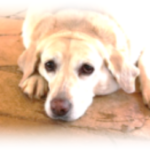
Try a slow-feeder bowl (see photo) AKA an Anti-Gulp bowl can work very well, as the dog has to pause, think, and then eat around a series of ridges or mazes. (Also a useful device for dogs with gastric problems, and the undernourished who would otherwise bolt their food.)
-
Give treats, yes, but the low-calorie kind! Carrots, chopped small, peppers or apples rather than biscuits or cheese cubes.
-
If necessary, ask your vet about a controlled complete diet.
It won’t be easy, but it can be done. Dogs, like wolves, eat to live. But those who live to eat deserve our help too.
.Slow-feeding bowl.
*Study by Dr. Eleanor Raffan, University of Cambridge
WHEN DOGS WERE DOGS (then and now)
By Karen Whitchurch ©2024
In the olden days, when I was a child, life was simpler. Clothes were ‘School’, ‘Best’ or ‘Playing Out.’ We ate fresh food, homemade and seasonal, not processed or takeaway, we walked, cycled or caught an infrequent bus, listened to the radio and (eventually) watched black-and-white tv, which packed us off to bed with the National Anthem. We had no supermarkets, internet, online shopping or mobile phones. It was the era of take-it-or-leave-it.
And, whisper it, we didn’t really train our dogs. They were just sort of there alongside us, always off-lead (we lived in the countryside) sniffing, socialising and coming when called, as expected. I can’t remember anyone teaching commands, except maybe Heel! or Come!.our dogs learnt through osmosis, or maybe telepathy, but it seemed to work.
However, any family dog worth its salt could sit up and beg, roll over and play dead and catch biscuits. Petfood came not in cans or packets labelled ‘Balanced nutrition’ or ‘Made with love for your best friend’ but from the fish shop or the butcher’s, raw or boilable with free knuckle bones, and scraps from our tables. Dog biscuits were usually charcoal, which I loved, whilst detesting meat, so those ever-present dogs under the table came in very handy.
Nobody gave a thought to cleaning up after their pets, it just wasn’t a thing. Grooming and trimming were done at home with comb and scissors, and with varying results. Neither did we dress up our dogs for Christmas, Easter or their birthday: no need when we had dolls, teddy bears and baby siblings to humiliate. People were not ‘pet parents’ of ‘fur-babies.’ Nor did we analyse our pets, but loved them for who and what they were…in short, we let them be dogs.
Of course, there were downsides. Dogs were not routinely vaccinated, neutered, or wormed: fleas and ticks gorged on their blood. Unwanted litters were frequently drowned, and, despite the 7s 6d (approximately 37p at today’s prices) dog-licence fee, strays were everywhere. Veterinary medicine was yet to control many now-treatable conditions like severe allergies, Cushing’s disease, demodectic mange and diabetes. Antibiotics for humans being still a novelty, let alone for domestic pets. And distemper was both a lead-based paint and a dreaded canine disease.
DOG LOGIC
By Karen Whitchurch ©2024

I know, I know. The dog understands every word you say…doesn’t he? Therefore, as with an eavesdropping child, you sometimes have to spell things out, like B.I.S.C.U.I.T/ D.I.N.N.E.R/B.A.L.L…or whisper, or resort to speaking French, and even then, Doggo is one step ahead of you, having read your body-language, understood all your gestures and mastered your every routine. Hence coat on/ handbag and keys out/ radio on/Dentastik at the ready means that you’re going out, and he isn’t. So far, so good. Everyone knows where they are, and there’s comfort in routine.
LATERAL THINKING
Of course we’re attuned to our pets, but dogs don’t think like us. Much of their reasoning is instinctive, primal and survival-based. Dogs do tend to live in the moment, but they are also quick learners, with surprisingly long memories. Anything experienced in those first crucial puppy months, positive or negative, is forever etched onto their brains.
For instance, Socks, the Jack Russell, who’d stood on a wasp when he was tiny, and for the rest of his life held up that poorly paw whenever he saw a fly! Or Cadbury the Labrador who had pawed at an intriguing feather which had unfurled in his face and gone for him! He never forgave or forgot, and would for the rest of his life flee in terror whenever he encountered one. Barney, my first Airedale, swiftly worked out that, once evening coffee preparations were underway, the biscuit-barrel would come out. He would wait quietly until we took that first sip before launching into his ecstatic Biscuit Dance, a clever combination of routine and applied dog-logic.
My dogs love their dinners, and don’t come up for air until every last bit has gone. I have never, ever, been known to drool over their food…so then why do they hang around mine, doing the big-eyed pleading starvation act? (Because they’re opportunists, and it’s always worth a try!)
THEY’RE OUT TO GET YOU!
If your dog has ever spotted a cat* sitting on a particular fence, gate or post, he or she will look out for it every time he passes. It was there once, so there it shall be for all time. Likewise, any scary experience, loud noise (think fireworks) or unexpected event can trigger a lifelong reaction. I have no idea what had happened to my rescued Springer before he came to us, but he would go into abject, tail-down panic every time he saw a plant-pot! It is possible, with time and patience, to de-sensitise a dog to some of these things…some, but not all.
There is a bittersweet YouTube video of a dog refusing to exit an open patio door until his owner makes a big thing of pretending to fling wide the doors…and the.same thing going back in. And everybody laughs. AW! How sweet! Isn’t he funny! Yet it doesn’t take a Dog-Whisperer to unravel the back-story of the traumatised dog who had, once upon a time, run into that closed door and subsequently found his own way of coping. Now that’s dog-logical!
There is one rather sweet piece of canine reasoning common to most dogs, especially puppies, and that is their habit of jumping up at flying birds. Many of them, despite repeated failure, do so all their lives, because, hey, they just might get lucky! I like to think of this as eternal dogged optimism. Long may dog-logic encourage them to reach for the sky.
*Possibly belonging to one Edwin Schrödinger
DOGMA
© karen Whitchurch 2025
Humans have laws, dogs have rules. Subtle, unwritten, created by long-ago wolves, and carried down through the generations so that every dog knows where he stands. Here is the word according to Man’s best friend.
The Ten-Second Rule applies to anything dropped on the floor, edible or not, unless more than one dog is involved, in which case fastest forward wins. There are no allowances for older, slower or disabled participants. (See Dog-eat-Dog.)
Socks are must-haves, written into the DNA of every self-respecting dog, and may be stolen singly, in pairs or balled-up. Wet, stinky hosiery pulled from a washing-machine or welly scores extra points. Modern textiles and classic tug-of-war techniques allow captive socks to be stretched by at least ten times their normal length before expiring.
Any attempt to retrieve illicit objects from a dog’s mouth will trigger the gobble-response. Don’t even bother. The only option is a high-value swap, which may or may not be successful, depending on treat quality and the gobbler’s stubbornness.
Drinking water must be freshly-dispensed: anything older than two minutes and/or harbouring spitty bits, froth, foliage or dead insects will be rejected and must be immediately replaced. Don’t even think about cheating by topping it up. They will know.
Treats broken in half will not do, neither will an unequal distribution of assets, because all dogs can count. (See: Death Stare.)
Any stick, branch, half-eaten ball, lost glove or other discarded item will provoke an epic battle for possession, which, if not swiftly terminated, will continue for hours. (See: retrieving manky, abandoned underpants from dog’s jaws whilst maintaining one’s dignity. In public.)
One dog’s ball is another dog’s trophy and far superior to his own. (One of mine can cram two balls and a stick in his gob, just to prove the point…See: Top-Doggery.)
During walks: Every. Single. Item. on the pavement/ground/grass must be minutely checked for edibility, whatever the weather and however long it takes. (See: Interesting walks on shingle, also Sensible precautions against famine.)
Territorial intruders: (anything larger than a butterfly) will not be tolerated. Cats, squirrels, hedgehogs and rabbits are worth the chase, but all birds larger and scarier than pigeons, particularly swans, seagulls and peacocks, are not to be messed with. (See Managerial Responsibilities.)
Any cat sighting must be double-checked when passing the original spotting-place. Forever.
Shouting at callers, delivery persons and visitors goes with the territory (!) but barking at one’s own Pack is Very Bad Form. (See: The Canine Etiquette Guide.)
Smell and taste experiences: Top picks of the year as chosen by our resident panel are: eau-de dead fish, fresh horse-manure, parfum de pheasant, rancid rabbit, liquid leveret and rotting roadkill. If it makes your human companion howl, it must be good. (See also: best stuff to roll in/retrieval of illicit objects from dog’s mouth.)
On returning from any solo outing (groomer, veterinary appointment/other) serious swaggering one-upmanship is required, with top notes of ‘I been somewhere you not been!’ This can and should be kept up all day. (Also see Top Dogery..)
In close proximity to Human food, a full charm-offensive must be employed (See pleading, puppy-dog eyes, waggy tails and pitiful cries. See also Extra precautions against famine.)
See what we’re up against? We cannot win…it’s a good job we love them.
EAT LIKE A WOLF
by Karen Whitchurch
A recent large-scale study* has concluded that dogs fed once a day age better, suffer fewer liver, urinary and gastrointestinal issues, and display superior cognitive function. Such a feeding pattern mimics that of wolves, suggesting that so-called‘intermittent fasting’ may, for canines, be natural and healthy. The jury’s still out on that one, but the reasoning is sound.
In the beginning, wolves and wild dogs lived on their wits, surviving by speed, strength and pack-power. The canine-human partnership brought mutual benefits: the combined hunt, and the shared kill. Through lean times and fair, everyone ate, or starved. Down the centuries, the union endured, until the majority of dogs in developed countries morphed into pets, their former roles redundant, and becoming dependent on Man for their dinners.
What do you feed your dog? Fifty years ago, there was no debate. Offal, butcher’s freebies, leftovers, or bog-standard Chum. If they were very lucky, they got bones, or sometimes charcoal biscuits (which, whisper it, I loved as a child!) But in recent times, the whole subject has become increasingly complicated. Nutritional theories abound: should a dog’s diet consist of raw meat, cooked meat, vegetables, carbs, kibble or dried food? If the latter, should it be grain-free, high protein, low protein, low-calorie, hypoallergenic, vegan, vegetarian or pescatarian? From simple beginnings has evolved the multi-million pound industry that is Fine Doggy Dining.
Dogs are primarily, but not exclusively, carnivorous, equipped with jaws and teeth designed for tearing flesh and crunching bone. But every successful species must adapt or die, so Man’s best friend is up for eating pretty much anything on offer (rather your dinner than his!) Like us, they relish tantalising smells and new, interesting flavours. Dog people always carry a pocketful of treats, for our companions and to share with incoming muggers. Cheese-balls, smallbite, sausages, liver-cake, biscuits, bits of raw carrot, apple slices…nothing wrong with any of those. My dogs adore custard, yoghurt, toast and suitable leftovers, all fine. What they don’t get is salty, fatty processed rubbish that will cost them healthy teeth and confer dodgy tummies or scurfy coats.
However, the whole canine nutrition thing has gone a bit bonkers. Supermarket pet-food aisles boast a bewildering selection of treats. Recently-encountered offerings include: avocado sticks, mango and pumpkin nibbles, yak-milk chews, savoury lentil and sweetcorn bites and sushi rolls. Next up, crayfish crunchies or possibly fox-scat snacks….is your tummy rumbling yet?
How much would you pay for your pet’s nibbles/snacks/treats? For many owners, the answer is: a small fortune. I give you: ‘California rolls’ (£50 for six smoked buffalo tails) ‘derived from premium quality 100% grass-fed buffalo.’ Or how about liver treats (£9.17 per 100g) ‘perfect as training aids or for positive reinforcement.’ Cod-skin fingers (£4.85 per 100g) ‘ideal for overweight dogs or those with allergies.’ Not forgetting ‘finest British gourmet sausages for discerning dogs’ (£27.00 for 500g.) Just to lure you in, here are some actual mouth-watering descriptions of foods you never knew your dog needed:
‘Lovingly hand-made from the finest locally-sourced ingredients.’ (Save the planet.)
‘Hand-crafted from !00% stone-baked organic vegetables.’ (Expensive.)
‘Contains sustainably-sourced Canadian salmon flakes and wild mountain garlic.’ (Ridiculously expensive.)
‘With succulent strips of kelp, quinoa and added chickpeas.’ (Just…why?)
Had enough yet? Me too. And guess what? YOUR DOG DOESN’T CARE! The Kennel Club has come right out and said so. At the risk of upsetting the creative chefs, it’s all Emperor’s New Clothes! It’s gone too far. Dogs do not need artisan treats! Yes, they need good, simple, varied nutritious food, fresh water, and stuff to crunch on. What they don’t need is added vitamins, minerals, preservatives, saturated fats, colourings, artificial flavourings or ‘lovingly-created’ anything by anyone but you! Feed them the expensive stuff, they’ll love it. Dish up good, plain, tasty ordinary fare and they’ll love that too. Let’s not lose sight of where they came from or who they still are. The dog is just a sidestep from the wolf.
*Study paper published on the BioRxiv website.
GOOD BREEDING by Karen Whitchurch
Handwritten sign, 1915

Shop-window card, 1965

Newspaper Pets Classified, 2015

WHAT WAS YOUR DOG BRED FOR?
Which just goes to prove that there’s nothing new about Designer-dogs. All so-called Pedigrees are hybrids, carefully selected and genetically modified for temperament, intelligence, appearance and other specific attributes. So do your homework before you acquire a new dog. Consider its breed, or, if it’s a Heinz, breed-components. And don’t be surprised when he or she follows those instincts! A gundog will retrieve, whatever. Learn to appreciate those little gifts, dead, half-dead, or possibly stolen from a neighbour’s washing-line. A herder will round up your cats, your kids, passers-by, or, worse, cars, cyclists or lorries. A digger will re-create the Somme in your garden; a guard-dog will shout its head off, admit visitors grudgingly, and, most probably, refuse to let them out again…all in the job-description!
DOG NUPTIALS
Of course dogs don’t marry, or even mate for life. But breeding is not an exact science, and animals have their preferences, just as we do. Like a fairy-tale princess, Crumpet, a Cavalier of my acquaintance, had her pick of suitors, all of them high-born and of immaculate pedigree. But no, wasn’t happening. What she fancied was a bit of rough….namely, the manky and arthritic Labrador from the nearby pig-farm. She took to hanging around the front garden, batting her eyelashes whenever he limped by. And when someone eventually left the gate open, she lured him in and made an old dog very happy.
A bitch, depending on size and breed, matures somewhere between the ages of eight and twelve months old, and comes ‘into season’ roughly twice a year, although we’re talking female hormones here, so this can vary. Her most fertile days are generally around the 8th-15th days of her cycle, when she will accept the dog’s advances (or not, if she doesn’t fancy him, see previous paragraph!) Any arranged mating takes place on the dog’s territory, and, if all goes well, the two will ‘tie.’ Unique to wolves, dogs and foxes, this strange process involves the dog turning so that he’s facing away from the bitch. Some say that a ‘good tie’ ensures fertilisation (it doesn’t) others that its function is that of a ‘fighting head at each end’ whilst the mating pair are vulnerable. Whatever the truth, the manoeuvre can last anything from five minutes up to an hour or more. .
One friend had a wonderful experience when her German Shepherd ‘tied’ for the longest 45 minutes of her life, whilst she and the bitch’s (male) owner, who hadn’t previously met, shuffled their feet in a chilly barn, whilst desperately making small-talk and doing their best to focus on anything but the happy couple.
I was once asked to officiate at the mating of two Golden Retrievers. The dog’s owner shipped her children off to Grandma’s, lest they should witness anything unseemly, while she locked herself in the kitchen and cleaned things to take her mind off the horrid stuff going on in her garden. It was love at first sight, the whole thing went beautifully, and the union resulted in ten healthy puppies. When it was all over, the owner appeared, clad in rubber gloves (although, surprisingly, not a bio-hazard suit) and disinfected the entire patio, just in case. Her loss. (But she did take the stud-fee, so that was all right.)
In 2009, after major disagreement with the Kennel Club, the BBC stopped transmitting Crufts, the most prestigious dog-show in the western world. The issue was the KC’s insistence on arbitrary standards for certain breeds, many resulting in ill-health and deformities (such as breathing problems in Bulldogs and Pekinese.) Somewhere along the line, greed had overtaken welfare, and guess who suffered? This exploitation is, in its way, every bit as bad as puppy-farming, because it’s all about profit.
Should you mate your dog, do it responsibly. There’s money in pedigree litters, but dogs are not breeding-machines, their puppies are not commodities. And please, please, if you own a Staffie, DON’T DO IT! Every rescue-centre in the country is crammed with them, betrayed and abandoned by the thoughtlessness of Man.
INTERVIEW WITH THE BOYS
©2024 Karen Whitchurch
Following last year’s exclusive with Bo (‘Interview with a Good Boy’) I’m lucky enough to have secured a pre-Christmas meeting with the Vizsla Brothers.
There’s a festive dog’s-head wreath on the front door, Nice. Mindful of their celebrity status, I knock politely so as not to wind them up (these A-listers can be super-temperamental) but their hearing’s pin-sharp and they are Straight On It, barking for Yorkshire.
Manservant Jim shows me in. Portraits of The Boys adorn the hall. ‘Who painted…?’ I begin.
‘Oh, Royal Academy friend. Ready for the fray?’
‘Of course. I have treats.’
‘Okay, then. Game on.’
And they are released. Cue squealing, jumping and hysterical wuffery. Claws skitter across the floorboards. Arlo whips with his tail, bashes with his bum, and leans heavily, which, considering it’s our first meeting, is kind of nice. Bo, narrowly missing the Christmas tree, whirls in ecstatic circles, gifting me a stray string of tinsel, before gripping me warmly by the wrist. Pressure, not pain, but there is a brief EEK! Moment.
‘Oh, dear.’ Is Jim smirking? ‘He’ll let go in a minute.’
In the relative peace of the kitchen, I look them over. Bo, that skinny adolescent, all oversized ears and racehorse legs, has grown, bodied up, filled out. His coat is deepest Autumn-coppery red. And Arlo, leonine, eyebrowed, bearded and mustachioed, is magnificent.
‘They’ve got chews,’ Jim says, ‘yak-milk things, and I’ve just filled the water-bowl.. I’ll be in there, watching cricket, if you need me.’ Don’t you dare need me is left unsaid.
‘Right.’ They are settled on their tweedy beds. ‘How’s it all going?’ Bo, chomping on something leathery with, wait…are those claws?…gives me a matey no complaints grin.
’Settled down, haven’t you?’ I observe. ‘Really matured, it’s incredible to…’ a sudden nether-regions reveal…’Ah, I see. You’ve had The Chop.’ A long, challenging stare: So? Did I even want puppies? Arlo Goldenballs is looking mightily smug.
Hoping for photos, I pick up my phone. No chance. Every dog ever knows what a camera means, cue a full-volume Don’t point THAT at ME! bout of silliness, after which Arlo potters off for a much-needed drink.
‘You two have so many fans round here! And is it true you have a Facebook page…?’ strange noises are coming from the utility room. Should I call Jim? Mutterings, grumblings and whinges, all at steadily rising volume…’what’s up, Arlo?’
Full-on glare. This! Water! Will NOT do! HE has SPAT in it!’ He waits, while I empty and refill the bowl, his expression saying Can’t get the staff. Bo, brought up in a farmyard, and couldn’t care less about sanitation, dives straight in, splashing the floor, walls and cupboards. Arlo rolls his eyes.
Back in their beds, as Arlo settles down for a nap, Bo goes into irritating little brother mode. Sleep? No you don’t! Poke poke poke. Play with me! Nibble nibble nibble. Arlo, doesn’t lose his cool, indulging Bo like the firm-but-fair Top Dog he is…until he’s had enough. One glare from beneath those brows says STOP. And Bo does, because that’s how dogs work.
After ten peaceful minutes, there’s a growly stand-off over the leathery clawed thing and the yak-milk chews, which Arlo settles by grabbing the lot and then lying on them. And at last I manage a few decent photos: pictures the Puperazzi would kill for. The interview is over.
‘Don’t get up,’ I tell them. But guests must be escorted, so Arlo comes in for a lean, and Bo takes my wrist, gently this time, a farewell caress. I slip them both a fat tripey sausage. ‘Of course, you don’t know about Christmas…you will, it’s all good. Enjoy the walkies, the dinners and the new toys. I’ll see you next year.’
I slip out, like Santa exiting a chimney, no noise, no fuss and no disturbing the valiant Jim.
LETTING GO: THE LAST GOODBYE
by Karen Whitchurch
On a bright July day, Monty left us. There were lumps and bumps, his great heart was failing, making him puff and pant and struggle to keep up. Our once tank-like Giant Schnauzer had grown skinny and shrunken. Walks had been reduced to little more than plods round the cool, shady perimeters of the park, evenings spent snoring in front of the telly with his family around him.
He’d had a good life, a good innings. He was tired. It was time, yes, yes, we knew all that, as did the lovely vet who told it like it was. ‘We could keep him going on medication, but, it’s quality of life. If he was my dog…’ And isn’t that exactly what you want to hear? Confirmation that you’re doing the right thing, the best thing, the only thing? Of course it is. It’s the last, and the hardest thing we can do for them…but none of that stops it hurting.
LIFELONG FRIENDS
Twelve years is a reasonable span for a large dog. It’s also far too short a time for those who loved him, and nothing can change that because, to paraphrase Rudyard Kipling, ‘We gave our hearts to a dog to tear.’
Monty came to us aged three, though we’d known him from puppyhood, and he fitted right in, funny, laid-back and utterly loyal. From day one, he took over guard-duties, positioning himself in doorways or stair-landings in order to watch over us. Each of the seven grandchildren was welcomed and protected as a full pack-member. Brave, stubborn and fearless, he would never pick a fight, but one pereceived insult, and he’d be straight in! Monty held his own Grudge-List, never forgiving or forgetting anything he construed as canine bad manners.
TRAINING THE WHIPPERSNAPPERS
Monty loved Obedience training. Learning new things (you can teach an old dog new stuff!) or showing off his accomplishments, socialising with his friends (canine and human) and reassuring puppies and rescued dogs, who all instinctively trusted him: He just gave off good vibes. And most of all, he was an absolute gentleman. When we’re able to resume our classes, his solid, benign presence will be terribly missed.
SAYING GOODBYE
Monty’s pack was with him when he left: being there helped Arlo understand and accept that he wouldn’t be coming back. He didn’t once look for him, but he did grieve, as dogs do. He was lost, flat, uninterested, and no wonder, having lost his lifelong guide and mentor. Cuddles, extra walks and fun training have helped him bounce back, but certain things have lost their savour. Dinner tastes much better when you’re in competition, and where’s the fun in shouting at the postman or chasing next door’s cat on your own? In short, dogs need their fellow creatures. Arlo is learning to be his own dog, but, when the time is right, we’ll find him a friend…a new partner, not a replacement. .
There’s a polished wooden box on the dining-table with his name engraved on it. Maybe all we have left of Monty, except that it isn’t. He gave us so much and left so many fun memories, along with a lifetime’s-worth of videos and photographs.
Monty, you tore my heart, but I don’t regret one single moment. You were a great dog, and you’ll be a hard act to follow.
Race against time
©2025 by Karen Whitchurch
Greyhound racing is 100 years old next year, but according to recent reports* of bad publicity and track-closures, may not survive the decade. Well, hurrah, good riddance and not before time.
The first-ever event took place at Belle Vue, Manchester, in 1926, and by the mid-1950s, there were thirty-three tracks in the London area alone (only one, Romford, now remains, along with nineteen others in the whole of the UK.) New Zealand, one of the few countries to have hosted the ‘sport’ is to ban it completely from 2026, citing avoidable deaths and injuries, dubious training-practices, and the fate of ex-racers (typically 3-5 years old on retirement.)
According to 2023 figures from the animal charity Blue Cross, 109 greyhounds died while racing (tracks are not straight, and cornering at 40mph can be lethal) and 55 were euthanised because they couldn’t be re-homed. This is undoubtedly the tip of an unimaginable iceberg. Figures released by C.A.G.E.D. (a Greyhound charity) show that almost half of all dogs (English and Irish) bred for racing are destroyed.
In 2006, animal welfare groups called for an urgent enquiry after reports that David Smith, a County Durham builder, admitted killing more than 10,000 ex-racing greyhounds and burying them on his land. For a tenner, Smith would ‘dispose of’ the superfluous dogs, using a bolt-gun, no questions asked. Owners came from all over the country to avail themselves of his ‘services’: much cheaper than going to a vet. Despite national outrage and searching questions, no such enquiry was ever commissioned, and, in 2025, little has changed.
Smith could not be prosecuted for animal cruelty because he held a licensed bolt-gun, and therefore disposed of the greyhounds ‘humanely’ (Google ‘bolt-gun’ and then reconsider the word ‘humanely’) but could be pursued for breeching ‘Pollution, prevention and control’ regulations, aka waste-disposal. The irony.
It’s a cold, hard fact that the greyhounds are expendable, commodities exploited by managers, trainers and Betting franchises and then thrown away, but not recycled, because there will never be enough ‘loving homes’ for so many. These noble dogs are born to run, but in short bursts of explosive energy. Their alter-egos are gentle couch-potatoes that can live to 14 or 15 years old, and make wonderful companions, but their very speed, grace and athleticism condemn them to suffer for Man’s greed in the name of ‘The King of Sports.’
So, yes, I’m cheering every time another stadium closes. May dog-racing go the way of other so-called ‘traditions’ like bear-baiting, cock-fighting and human slavery, and may the Greyhounds run, not for their lives, but because they can..
Source material: The Daily Telegraph, 21.01.2025. *
Below: The ‘Monument to the million’ 2016 (Holywell pet cemetery, North Wales) commemorates the 1 million+ greyhounds killed by the racing industry.

WHEN GOODBYE IS NOT ENOUGH
By Karen Whitchurch
Our dogs leave us far too soon. Their span, compared with ours, is fleeting, and their going breaks our hearts. In that dreadful, empty aftermath, you’d do anything to bring them back. But death is part of life, an unbreakable cycle as inevitable as night and day…isn’t it?
A growing number of owners disagree, and, determined to make sure their beloved pets live on, are having them cloned. Singer Barbra Streisand was so distraught when Samantha, her beloved Coton de Tulear (a Madagascan toy-breed) died at the age of fourteen, that she chose this option…twice…reportedly paying in excess of $100,000 dollars for two ‘duplicate’ puppies. ‘Each of these babies,’ she maintained, ‘will develop as individuals.’ Although she ‘really hopes they will have Samantha’s serious brown eyes.’ Well, duh, of course they will, they’re clones!
The technique has been around for years, but came to prominence in 1996 with the publicity surrounding Dolly the sheep. There was (and still is) much disquiet about the health-implications for cloned animals, and also fears that the human equivalent is just around the corner.
Cloning usually involves three ‘mums’:egg-donor, DNA provider, and surrogate ‘birth-mother’. A lot to go wrong then. Before she died, cells were taken from Ms Streisand’s dog and sent to a Texas laboratory for processing. The outcome made headlines: maximum publicity and a nice profit for the cloning-company, and for Ms Streisand, a fairytale future with her second-time-around Samanthas. An absolute win-win then. Or was it?
Doesn’t this whole concept diminish the life that went before, as if Samantha had never existed? Was she special, unique, irreplaceable, or just disposable? Doesn’t it send out the message that, well, RIP and all that, we’re sad, heartbroken even, but, hey, it’s okay, because we can soon get another one? Am I alone in finding that obscene?
Cloning for pet-owners has been available for more than a decade (albeit only to the very well-off) but how many others, if they had the means, would go for it, and for a multitude of reasons? I totally understand the temptation. Who wouldn’t long to be reunited with a beloved dog? But would anyone seek to replicate a pet which had suffered a debilitating illness or injury? Who would bring them back to suffer?
Cloning is widely considered to be weird, creepy, unnatural. Meddling. Playing God. Yet, hang on, couldn’t the same be said about fertility treatment, chemotherapy, resuscitation? Of course it could. But none of these procedures denies the individual who went before, which surely is an insult to its memory? We have to accept that death flows alongside life. A huge part of pet-ownership is knowing when to let go. The rest is treasuring the life that was, not seeking to re-create it.
FREEDOM TO BREATHE
By Karen Whitchurch ©2025
Pictured is Claude, my granddog, who frequently comes for his holidays (we refer to him as ‘the visiting dignitary.’) The love-child of Gollum and ET, he’s a French bulldog, spirited, playful, up for anything and a fun little character. He is young, energetic, fit and muscular, but also brachycephalic*, meaning he has inherited a broad head, short muzzle, flat nose… and trouble breathing. He snores when he sleeps, snorts and snuffles when awake, and gasps when walking. On exertion or during warm weather, he sounds exactly like a tractor going uphill. It’s most distressing to hear, and also most unfair.
The first question is: who would deliberately breed dogs with disabilities? Answer: profiteers. Secondly, why would anyone take them on, knowing the lifelong difficulties they will suffer? Answer: flat-faced breeds are incredibly popular (see list below) and buyers (generally women, I’m sorry to say) regard them as cute, cuddly, vulnerable, in need of babying, mothering, spoiling, dressing-up, whatever, whilst forgetting that they’re still dogs with all instincts intact. A pug, just like a Labrador, yearns to run flat-out, chase balls, chase birds, do zoomies…but, like an asthmatic child, it can’t get its breath.
The Kennel Club is (very slowly) waking up to the fact that canine health should be top of its welfare agenda. However, instead of banning flat-faced breeds from Crufts, it has fudged the issue by offering a ‘Play your Part’ report, ‘urging collaboration between breeders, owners, vets and the Government…unlike Germany, Norway, Austria and Switzerland which have legislated to prevent ‘torture breeding’, and the Netherlands, which has not only banned twenty flat-faced breeds, but is also seeking to veto their import. Well, good for them.
For struggling dogs and owners, an operation is possible: BOAS, which stands for Brachycephalic obstructive airway syndrome, and is every bit as invasive as it sounds. Its options include nostril widening, soft-palate trimming and laryngeal restructuring. Results are reportedly good, but how very sad that such a procedure should be necessary.
As for Claude, he’s part of the family and we love him dearly. And he is what he is. But…if only his anatomy matched his lust for life, his right to run, his freedom to breathe.
*BRACHYCEPHALIC BREEDS:
Bulldog, French bulldog, Bullmastiff, Boston terrier, Boxer, Pug, Pekingese, Lhasa Apso, Griffon Bruxellois, Staffordshire bull terrier, Cavalier King Charles spaniel, Affenpinscher, Japanese Chin, ,Dogue de Bordeaux , Tibetan terrier, Sharpei, Petit Brabançon, plus Puggle and/or any other cross.
DROID DOGS
by Karen Whitchurch©2025
Left to right: cute, Disney-type robodog, real dog, and Sirius.
Imagine this: a loyal, biddable, canine companion requiring no feeding, grooming, exercising or veterinary visits…just charge him up and watch him go! Meet Sirius, the world’s first trainable robot dog, designed and created in China, and available to his public in October 2025. The question is: would you adopt him?
It seems that many would. The busy, the lonely, the aged, the terminally ill, the disabled, those without space or with extensive commitments and demanding careers, the severely allergic, anyone without friends or family or suffering mental or physical limitations, in short, people who would love to share their lives with a real dog, but are unable to. The robot dog is now A Thing.
Sirius, word has it, is a quick learner: able to recognise his owner, understand commands and respond accordingly, much as a real dog would. He is described as quiet, companionable, undemanding and above all, There. Those clever engineers at the Hengbot company have even built in little ‘doggy’ quirks such as tail-wagging, stretching, head-tilting or the occasional mini-bark. Owners can also upload customised packs offering individual barks, behaviours and movements mimicking those of real dogs. And Sirius possesses both short and long-term memory, enabling him to build on past interactions and adjust his behaviour accordingly. Plus, he doesn’t pee, poo, vomit whine or chew the furniture. Wow! What’s not to like? Well…
There is as yet no mention of cost, but you can bet all that expertise won’t come cheap. Elon Musk (who else?) is said to have developed a robodog prototype, provisionally priced at $2000, although constant upgrades and maintenance (available, naturally, through authorised company engineers) will doubtless necessitate costly Petplan-type insurance policies.
Robot dogs have already been developed for use in war-zones and police operations, and why not? Tough, tireless unstoppable machines seem like the way to go, far better than endangering the lives of flesh-and-blood creatures who didn’t volunteer.
So back to my original Sirius question: would you adopt him? While I can appreciate his many good qualities, he’s not for me. A dog, to my mind, should not be a silent, obedient cyber-companion but an entertaining combination of fun, fur and feistiness, with added bounce. There is no better therapy than twiddling a dog’s eyebrows or stroking soft ears. If he chooses to sit on top of me, pinch my Crocs, bring me a ball or ask to go out just as I’ve sat down, fine. Sirius demands nothing whereas a real dog seeks attention, interaction and affection, and that’s how it should be. He’s my dog, I get him, and he gets me.
Sirius will never break my heart as my own dogs surely will. I might get used to him, be amused by him, grow fond of him even, but, bless his titanium heart, he’ll never own me like the quirky creatures I live with, the ones I’ll comfort when they’re ill or injured and hold when they breathe their last. And I wouldn’t have it any other way.
‘Robutt is just a machine. It’s just programmed to act the way it does.
A dog is alive. You won’t want Robutt after you have the dog.’ Isaac Asimov: ‘A boy’s best friend.’
‘Brothers and sisters, I bid you beware of giving your heart to a dog to tear.’
Rudyard Kipling ‘The power of the dog.’